|
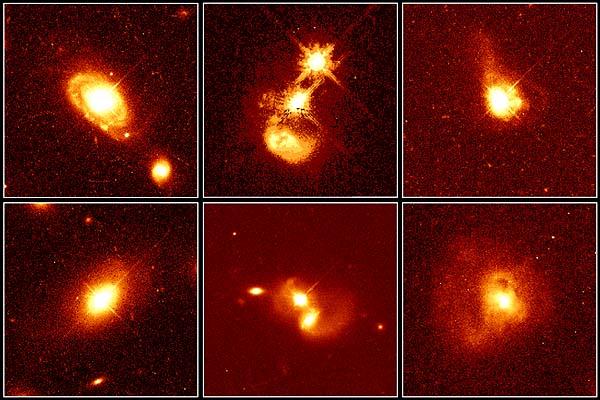
The Center's answer: The objects in the picture are in the process of consolidation of energy-material clots. The energy is emitted from the inside and the phases of emission open millions of tons of luminous charged particles. Entrance into the space a bit further from the center attracts neutral energies whose charge is opposite to that of material particles. Charged neutral energies are absorbed by the concentration field and provide the process with additional energy. Neutral energies cannot have the same charge as the emitted particles because they have a sign of repulsion from any charged particle and during a contact form an opposite charge according to the Laws of the Universe. |


